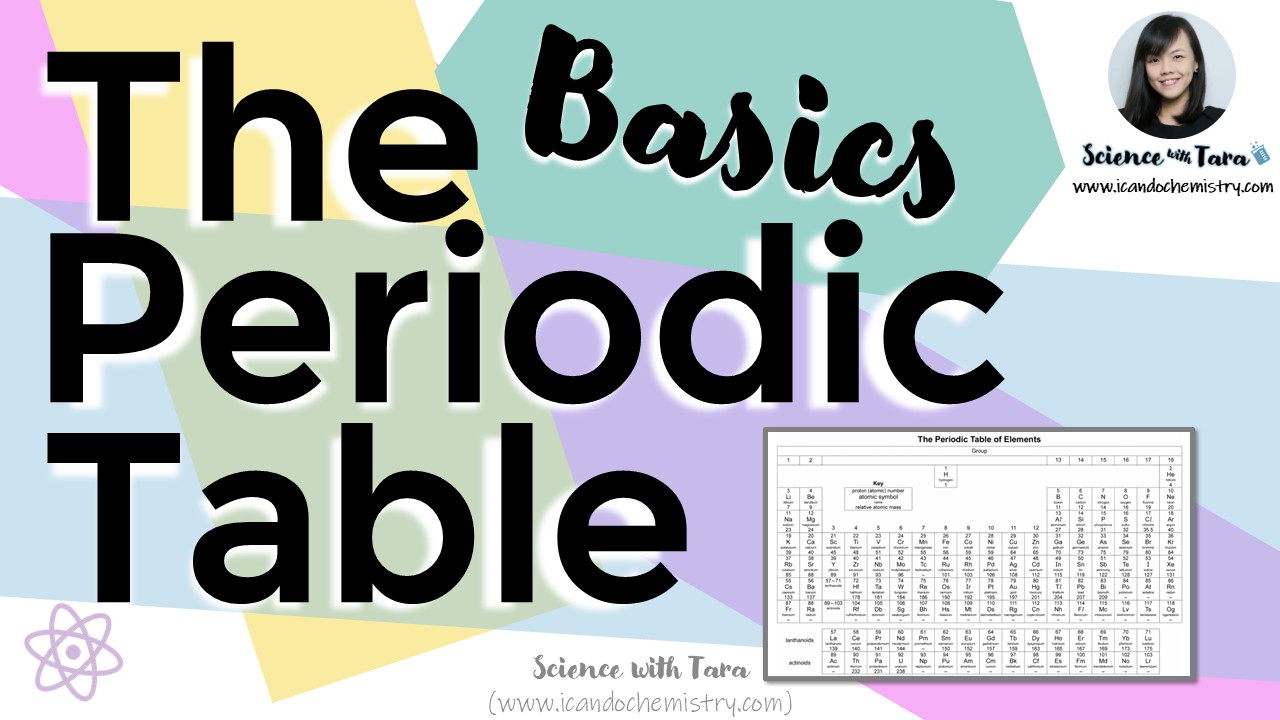
The Periodic Table is a list of elements arranged in order of increasing proton number, also called atomic number. In the modern IUPAC system, it is organised into horizontal rows called periods and vertical columns called groups.
Structure of the Periodic Table
In the modern Periodic Table, there are 18 groups, numbered from Group 1 to Group 18, and 7 periods going across.


In the middle of the table is a block of metals known as the transition elements.
A note on group numbering
O Level and SEC G3 Chemistry use Group 1 to Group 18.
Some IGCSE notes still use the older labels: Group I, Group II, Group VII (halogens) and Group VIII or Group 0 (noble gases). The chemistry is the same. Only the numbering looks different.
Metals, Non-metals and Metalloids
One useful way to look at the Periodic Table is to divide it into metals and non-metals.
If you draw a diagonal line across the table:
- elements on the left are mostly metals
- elements on the right are mostly non-metals

The elements close to that line are called metalloids. Metalloids have properties of both metals and non-metals. A common example is silicon, which is used in the semiconductor industry to make computer chips.

In general, as we move from left to right across a period, elements become less metallic and more non-metallic.
Names of Important Groups
- Group 1: alkali metals
- Group 2: alkaline earth metals
- Group 17 (Group VII): halogens
- Group 18 (Group VIII / Group 0): noble gases
The elements between Group 2 and Group 13 are the transition elements.

Properties of Elements in the Same Group
Elements in the same group have the same number of electrons in their outermost shell. Because of this, they tend to have similar chemical properties. They form ions with the same charge and compounds with similar chemical formulae.
As we go down a group:
- proton number increases
- the number of electron shells increases
- the atoms get bigger


Properties of Elements in the Same Period
All elements in the same period have the same number of electron shells. For example, all elements in Period 3 have three electron shells.
As we move from left to right across a period:
- metallic character decreases
- non-metallic character increases


Oxides of the Elements
The oxides of elements also change across a period, from basic oxides to amphoteric oxides to acidic oxides.
Basic oxides
Most metal oxides are basic. Examples include calcium oxide, CaO, and copper(II) oxide, CuO.
Amphoteric oxides
Some metal oxides can be both basic and acidic. These are called amphoteric oxides. They react with acids and with bases to produce a salt and water.
Common examples:
- zinc oxide,
- aluminium oxide,
- lead(II) oxide,
Remember these as ZAP: Zinc, Aluminium, Lead(II).
Acidic oxides
Most non-metal oxides are acidic. Examples include carbon dioxide, , and sulfur dioxide, .
Neutral oxides
Some non-metal oxides are neutral. They are neither acidic nor basic. Examples include:
- carbon monoxide,
- nitrogen monoxide,
- water,


Group Number and the Ions Formed
Elements in Groups 1, 2 and 13 are metals. They tend to lose electrons to form positive ions. The charge of the ion is usually the same as the group number:
- Group 1 elements form ions
- Group 2 elements form ions
- Group 13 elements form ions
Elements in Groups 16 and 17 are non-metals. They tend to gain electrons to form negative ions:
- Group 16 elements usually form ions
- Group 17 elements form ions
Elements in Groups 14 and 15 tend to form covalent compounds rather than ionic compounds. They share electrons to form covalent bonds.
Elements in Group 18 are the noble gases. They have stable electronic configurations, so they are chemically unreactive and do not usually form compounds.


Summary
- The Periodic Table is arranged in order of increasing proton number.
- Groups are vertical columns. Periods are horizontal rows.
- Elements in the same group have similar chemical properties.
- Metallic character decreases from left to right across a period.
- Oxides change from basic to amphoteric to acidic across a period.
- Group number can be used to predict the charge of the ion formed.
In the next posts, we will look at the elements in specific groups.
Have fun learning Chemistry.